Frameworks That Transformed My Grant Writing
My business turned four this past August, and if you’d asked me back then what would get me here, I probably would’ve said: “sheer willpower and a Google Doc.” And while that’s partly true (Google Docs have seen me through some rough drafts), there are two frameworks that have been instrumental in shaping how I work, how I grow, and how I write successful grants: the Cultivating Safe Spaces (CSS) framework by Naqsmist Storytellers Inc. and the Lean Canvas one-page business model framework by Ash Maurya.
Now, don’t let the word framework scare you. I’m not talking about something academic or dry. Frameworks are just foundational structures, like scaffolding, that help us build something that lasts. They guide how we think, make decisions, and move forward. But here’s the thing: they only work if you actually engage with them.
From Overwhelm to Ownership
When I first learned about the CSS framework and the Lean Canvas model, I was overwhelmed. I kept thinking I was missing something. The Lean Canvas didn’t tell me how to test a concept, and the CSS framework didn’t map out how I go about understanding myself. Here's the thing you need to know about me: I came from a strict patriarchal upbringing where “follow the instructions to the letter” was the law or face corporal punishment. So when I left home at 15 and started figuring life out for myself, I was lost and hungry for step-by-step clarity.
But here’s what I’ve learned: frameworks aren’t magic wands. You have to practice them, live with them, make them your own. My CSS training introduced me to nested systems and the prompt to experiment with my own frameworks. I eventually joined a group doing shadow work, and I was inspired to create a framework to help me navigate triggers and trace their connections to core wounds that need my attention. This is important work so I can better understand my actions and reactions vs. projecting my wounded parts onto everyone around me.
If you're learning the CSS framework or the Lean Canvas, remember this: frameworks are meant to evolve with you.
What I know now is that we all have to find our own way. The way I go about understanding myself might not work for you, and the way I ideate in my business might not work for you either. It’s about trying, failing, learning, and trying again. Something that took me a long time to get comfortable with, since it was drilled into my head as a child that I had to do things perfectly the first time, and if I couldn't, I shouldn't try at all. For me, going all in on being a Creative Entrepreneur for the last 4 years has required a lot of understanding self, a lot of self-development and a ton of trust and faith.
The Lean Canvas: My Secret Weapon for Grant Writing
I started studying the Lean Canvas model in 2021 through workshops and a college course in Calgary. It’s taken me a few years (and lots of scribbled-on printouts), but I finally get it. And now, it’s become an essential part of my grant writing process and business planning.
Why? Because every grant application is really just a pitch. Funders want to know: What’s the problem? What’s your solution? Who are you helping? How will you do it? How will you know it worked?
Sound familiar? That’s the Lean Canvas!
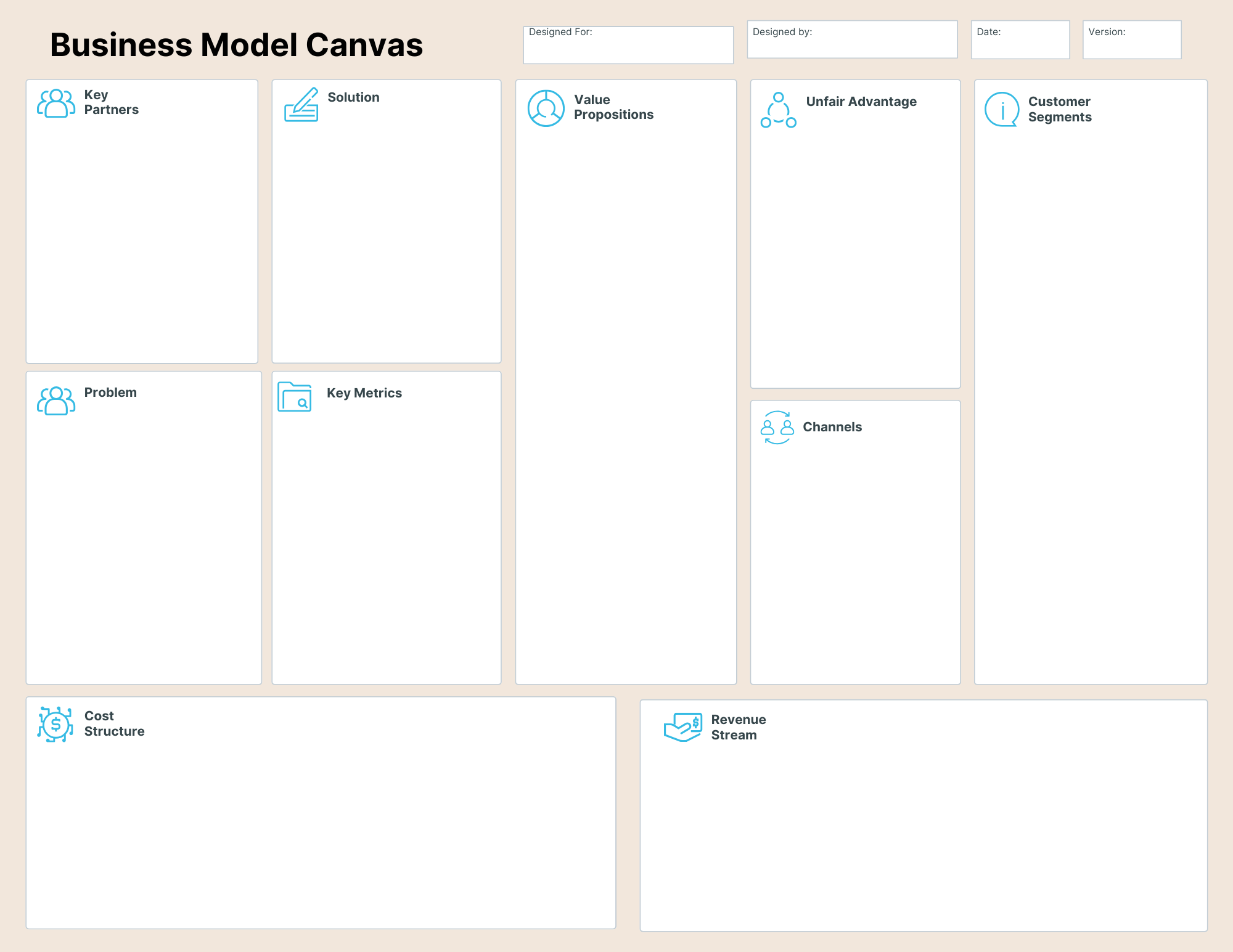
Here’s how I break it down (with a few of my own tweaks):
- Customer Segments – Who is your work for?
- Channels – How do you reach them?
- Value Propositions – What are you offering that’s unique or transformative?
- Problem – What issue are you tackling?
- Solution – What’s your approach?
- Key Metrics – How will you measure success?
- Key Partners – Who are your collaborators?
- Cost Structure & Revenue Stream – How much will it cost, and how will you sustain it?
Whether you’re a non-profit, a solo artist, a musician, a filmmaker or a social enterprise, this tool works. It forces clarity, and clarity is what funders love. There are several different variations of the one-page business model, including one for creative entrepreneurs that I'll introduce in a future post.
Enter the CSS Grant Writer
So what does it mean to be a CSS Grant Writer?
The Cultivating Safe Spaces framework has deeply shaped how I show up in my work and life. At the core of the CSS framework is understanding self. Essentially, it’s about understanding why you do what you do, so you can better regulate yourself when things get tough. CSS is about relational accountability, trauma-informed practice, and making room for authenticity in all we do. It reminds me that grant writing isn’t just about numbers and logic models—it’s about people.
And let’s be real: dealing with money and the granting system can be triggering. It’s a colonial system, built on fear, sickness/death, exclusion, oppression, and shame. That’s why CSS is so important; it provides a decolonial framework for navigating these systems. It helps us work together, not against eachother.
The CSS framework helps us understand different perspectives and how vicarious trauma can manifest within ourselves and in collaborations. It supports healthier communication, deeper empathy, and more equitable relationships, exactly what’s needed when the stakes (and the funding) are high.
By combining CSS with the Lean Canvas, I’ve created a process that’s both strategic and heart-centred. It’s not just about checking boxes. It’s about ensuring the projects I support align with community needs, values, and long-term impact.
You Can Do This Too
If you’re reading this thinking, “Okay, but I’m not a businessperson,” I see you. And I promise, you don’t need to be. You just need a plan, a purpose, and a willingness to sit down and get a little messy with it.
We are preparing to launch a mentorship program for Creative Entrepreneurs and Organizations at the end of 2026, but for now, we will be posting content from those programs to provide mentorship to our paid Life Café subscribers so they can sustainably manage grants and proposals with resilience.
Join the Life Café mailing list (it's free!) Or support our work for $5/month and be the first to know when an article is published. Join SJT Writing's newsletter to hear about our launches and calendar availability.